












By Joanne Van Voorhis
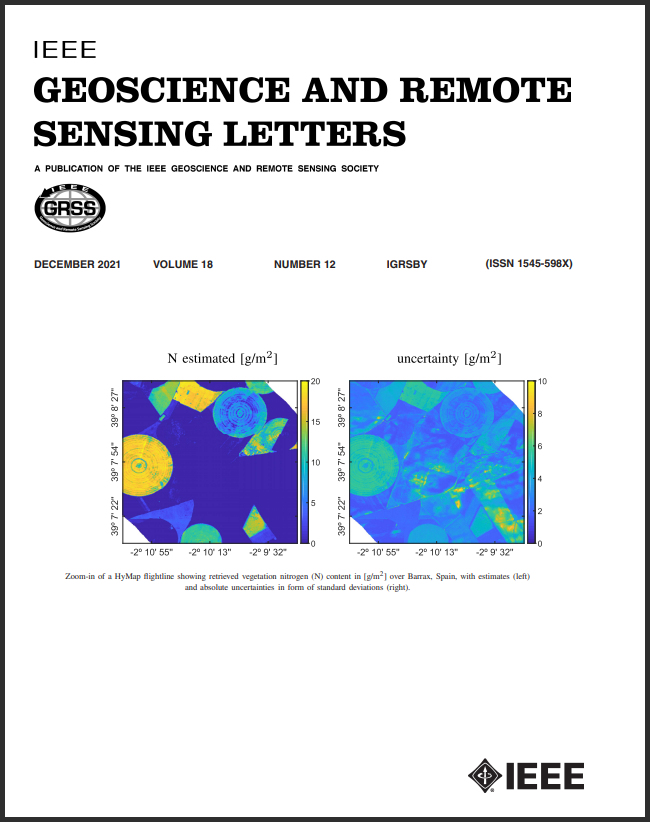
GRSS is launching a feature article series on the publications that shape communication within the IEEE Geoscience and Remote Sensing Society. Throughout the series, we’ll highlight the journals that serve as essential platforms for sharing research, advancing innovation, and connecting experts across the global remote sensing community. With this issue, we explore IEEE GEOSCIENCE AND REMOTE SENSING LETTERS (GRSL). GRSL occupies a unique position within the GRSS portfolio, and is specifically for short papers of up to five pages that address new ideas and formative concepts in remote sensing and Earth observation along with significant new and timely results and concepts.
Origins: From Transactions to a Dedicated Letters Journal
The origins of GRSL trace back to the early 2000s, when the volume and pace of submissions to IEEE journals in geoscience and remote sensing were increasing significantly. At the time, shorter contributions were often published within the Transactions on Geoscience and Remote Sensing as brief communications or letters. However it became clear that a more dedicated mechanism was needed to handle concise, high-impact documents.
In response, GRSS established GRSL, with its first issues appearing in 2003 as Part II of IEEE TRANSACTIONS ON GEOSCIENCE AND REMOTE SENSING and formal recognition as a standalone journal in 2004. The creation of GRSL reflected a broader trend within IEEE toward specialized “letters” publications, designed to accelerate the dissemination of new findings while maintaining rigorous peer review. For the geoscience and remote sensing community, this move was particularly significant, as it acknowledged the increasing importance of timely communication in a rapidly evolving field.
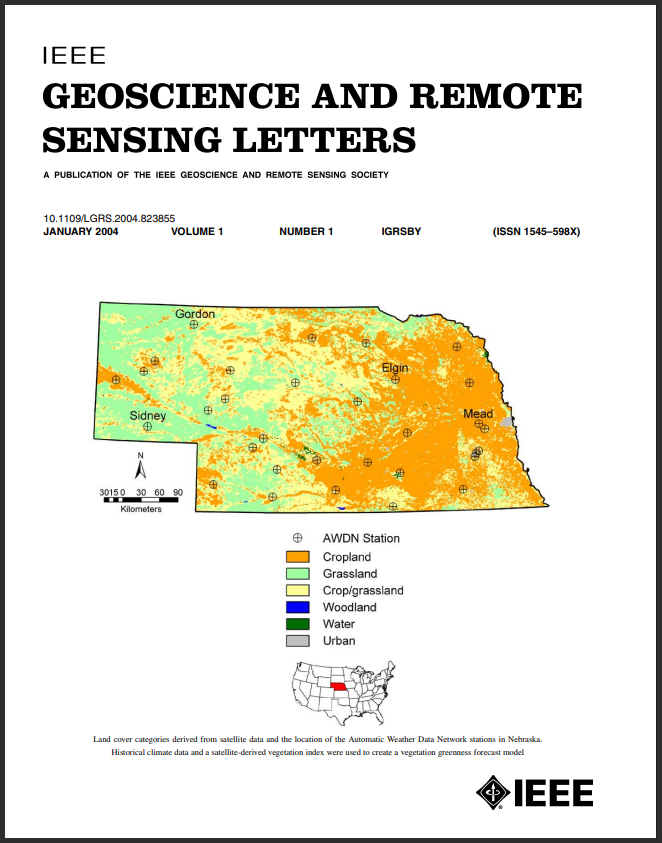
The editorial for the first issue in 2004 explained the premise: “January 2004 is the start of IEEE Geoscience and Remote Sensing Letters (GRSL), which “letters” have been published since April 2003 as Part II of IEEE Transactions on Geoscience and Remote Sensing (TGARS). The purpose of GRSL is to publish short, original papers in geoscience and remote sensing, while communications in TGARS remain the place for published communications regarding papers published in TGARS.” Topics in the first issue included “Forecasting Vegetation Greenness With Satellite and Climate Data,” “A Neural Fuzzy Network Approach to Radar Pulse Compression,” and “Optimized Onboard Lossless and Near-Lossless Compression of Hyperspectral Data Using CALIC.”
Charter: Speed, Concision, and Innovation

Because GRSL focuses on short-format papers, it encourages authors to communicate their findings with precision and clarity, distilling complex work into its most essential elements. “The emphasis on brevity is not merely a constraint – it is a defining strength of the publications,” says Dr. Ronny Hänsch, Editor in Chief. “We strive for a 30 day turnaround time – this means that GRSL readers can quickly learn about new developments. We know this is particularly valuable in areas where research is progressing rapidly, and where early dissemination can influence ongoing work,” he explains.
Rigorous Review and Editorial Leadership
Of course, the journal maintains the high standards expected of IEEE publications. Submissions undergo rigorous peer review, ensuring that all contributions meet criteria for originality, technical soundness, and relevance. Accordingly, the publication relies on the dedication of a broad network of volunteers to accommodate all submissions and publications.
The development of GRSL has been guided by a series of respected editors who have shaped its identity and ensured its success. Founding Editor-in-Chief William Emery played a key role in establishing the journal’s standards and positioning it within the GRSS publication ecosystem. Today, the journal is led by Editor-in-Chief Ronny Hänsch who is supported by an extensive international team of associate editors, guest editors, and reviewers. This global editorial structure reflects the diversity of the field and ensures that the journal remains responsive to emerging trends and developments.
“We are incredibly grateful to the many individuals who provide editorial guidance for GRSL,” says Dr. Hänsch. “It would never be possible to transform submissions efficiently into published letters without the teamwork and dedication of everyone involved.” Indeed the current list of Associate Editors (www.grss-ieee.org/publications/author-resources/grsl-associate-editors/) numbers over 70 volunteers from all around the globe.
GRSL is also part of the IEEE Transparent Peer Review (TPR) program. If authors and reviewers opt-in for TPR during the review process, upon publication of an accepted article, reviews and editorial decision letters are posted on Clarivate Web of Science and the article on IEEE Xplore will carry a TPR badge and also link to the appropriate WoS article/review record.
Operational Efficiency and Clarity
One of GRSL’s defining characteristics is its efficiency. The journal is designed to move submissions through the review and publication process quickly, achieving turnaround times that are significantly shorter than those of traditional journals. This efficiency is essential for maintaining the relevance of published work, particularly in fast-moving areas of research.
Part of this commitment to efficiency also lies in improving clarity and transparency regarding expectations for submitted manuscripts. To support authors and streamline the review process, GRSL has introduced detailed guidance through the GRSL Scope Description and the GRSL Checklist for Authors. These documents help authors better assess the suitability and readiness of their submissions before entering peer review, thereby reducing unnecessary delays and improving consistency in editorial decisions. Both resources were developed by the GRSL Editorial Board under the leadership of Dr. Hänsch and with valuable input from the GRSS AdCom and other GRSS Editors-in-Chief.
Community Impact
The impact of GRSL on the geoscience and remote sensing community is substantial. By providing a venue for rapid dissemination, it accelerates the pace of innovation, enabling new ideas to reach the community quickly. This is particularly important for emerging techniques, such as machine learning applications, novel sensor designs, and advanced data processing methods.
“Many influential developments in the field have first appeared in GRSL, where they gained visibility and sparked further research,” explains Dr. Hänsch. “The journal’s format makes it especially well suited for reporting early results that have strong implications, even if they are not yet fully developed into comprehensive studies,” he says.
Fees and Member Support
GRSL is dedicated to encouraging author submissions without many of the usual financial barriers. While GRSL articles can be up to five pages long, there is no charge for the first three pages. Pages four and five currently incur a fee of $230 per page for non-GRSS members, but since mid 2025, even that charge is now waived as long as the corresponding author is a GRSS member. Corresponding authors from low-income countries may also be eligible for waived or reduced publication fees. “We hope this fee structure encourages members to consider submitting their work,” says Dr. Hänsch. All submissions are made through the IEEE GRSL Author Portal.
A Platform for Emerging Ideas
GRSL also plays an important role in supporting early-stage research and new voices within the community. Its concise format lowers the barrier for publication, making it an attractive venue for early-career researchers and interdisciplinary teams. By providing a platform for focused contributions, the journal helps ensure that promising ideas are shared and developed. This role is particularly valuable in a field where innovation often begins with small, incremental advances. GRSL captures these advances, providing a record of the field’s evolution and a foundation for future work.
Encouraging Contributions and GRSL Special Streams
Within the broader GRSS publication ecosystem, GRSL occupies a unique niche. It complements longer-format journals by prioritizing speed and concision, ensuring that important ideas are communicated without delay. “We encourage submissions and welcome content on a range of topics,” says Dr. Hänsch. “We also have special streams focused on different topics that are open for a window of time,” he explains. Prior streams allow readers to easily view related letters by topic.
“I warmly invite the community to contribute to GRSL by submitting concise, high-impact papers that fit the journal’s scope and format guidelines. Researchers are also encouraged to join GRSS to benefit from free publication in GRSL, and to volunteer as Associate Editors, especially in areas such as weather radar, atmospheric science, geophysics, low-level SAR processing, multimodal learning, and computer vision for remote sensing,” says Dr. Hänsch.