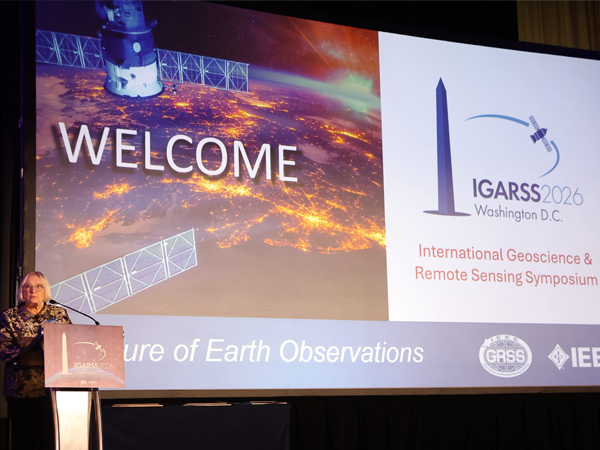

IGARSS (the International Geoscience and Remote Sensing Symposium) is the flagship conference of the Geoscience and Remote Sensing Society...
> IGARSS 2026
> Past IGARSS
> Future IGARSS
> IGARSS 2030 – Call for Proposals
Publications > Journal of Selected Topics in Applied Earth Observations and Remote Sensing
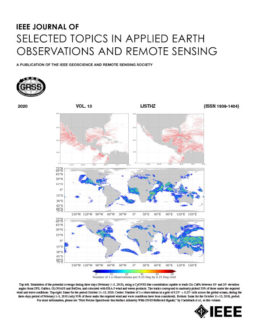
In keeping with IEEE’s continued commitment to providing options to support the needs of all authors, IEEE has transformed the IEEE Journal of Selected Topics in Applied Earth Observations and Remote Sensing into an Open Access Journal for the Geoscience and Remote Sensing Society (GRSS).
We invite you to have your article peer-reviewed and published in in our IEEE Journal of Selected Topics in Applied Earth Observations and Remote Sensing (J-STARS). This is an exciting opportunity for your research to benefit from the high visibility and interest the journal’s marketing launch will generate. Your work will also be exposed to 5 million monthly users of the acclaimed IEEE Xplore® Digital Library.
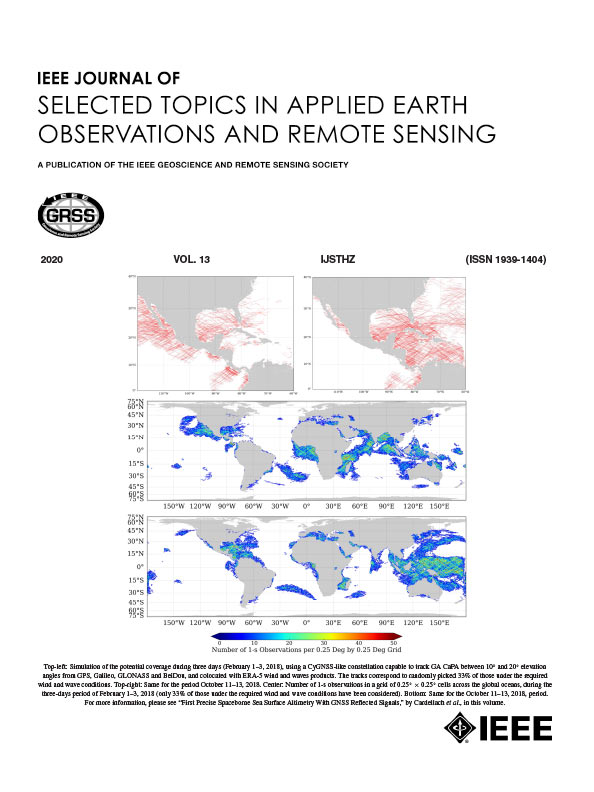
The IEEE Journal of Selected Topics in Applied Earth Observations and Remote Sensing addresses the growing field of applications in Earth observations and remote sensing, and also provides a venue for the rapidly expanding special issues that are being sponsored by the IEEE Geosciences and Remote Sensing Society. The journal draws upon the experience of the highly successful “IEEE Transactions on Geoscience and Remote Sensing” and provide a complementary medium for the wide range of topics in applied earth observations. The ‘Applications’ areas encompasses the societal benefit areas of the Global Earth Observations Systems of Systems (GEOSS) program. Through deliberations over two years, ministers from 50 countries agreed to identify nine areas where Earth observation could positively impact the quality of life and health of their respective countries. Some of these are areas not traditionally addressed in the IEEE context. These include biodiversity, health and climate. Yet it is the skill sets of IEEE members, in areas such as observations, communications, computers, signal processing, standards and ocean engineering, that form the technical underpinnings of GEOSS. Thus, the Journal attracts a broad range of interests that serves both present members in new ways and expands the IEEE visibility into new areas.
This journal reflects the growing interest in application themes in several IEEE conferences. Many papers are part of special issues that result from GRSS-sponsored (or technically co-sponsored) symposia, workshops, and similar initiatives. Some special issue topics, particularly those in the applications area, will now be published by the new open-access J-STARS.
The Open Access J-STARS journal is sponsored by the IEEE Geoscience and Remote Sensing Society. It will draw on the expert technical community to continue IEEE’s commitment to publishing the most highly-cited content. The editor-in-chief of the journal is the distinguished Professor Peifeng Ma, with The Chinese University of Hong Kong, Hong Kong, China. The goal of the journal is to publish very quickly—our rapid peer review process is now targeting a publication time frame of 10 weeks for most accepted papers. This journal is now fully open (since January 2020) and compliant with funder mandates, including Plan S.
The Article Processing Charge (APC) for all manuscripts submitted on or after January 1, 2025, is US $1800.
The following defines the range of topics that are appropriate for J-STARS: “Papers should address current issues and techniques in applied remote and in situ sensing, their integration, and applied modeling and information creation for understanding the Earth. Applications are for the Earth, oceans and atmosphere. Topics can include observations, derived information such as forecast data, simulated information, data assimilation and Earth information techniques to address science and engineering issues of the Earth system. The technical content of papers must be both new and significant.”
Paper submission is handled through the ScholarOne Manuscripts site (mc.manuscriptcentral.com/jstars). The work flow for submission and review is the same as that for TGRS.
Please read Information for Authors before submitting an article. Authors must also adhere to ORCID requirements.
We welcome individual articles and proposals for theme issues or special issues on topics relevant to JSTARS. Further information and guidance is available by contacting either the Editor-in-Chief or the Deputy Editor-in-Chief. We look forward to collaborating with the membership on an important and exciting new chapter in the evolution of both the GRSS and ICEO.