







IN FOCUS: Snapshot of GRSS Latin America Activities (Part 2)
By Joanne Van Voorhis

In Part 1, we highlighted the IEEE GRSS Latin America region and its growing presence. In this second installment, we turn our attention to the people behind the community – its members – and explore how the region fosters their members’ professional development, with the ultimate goal of inspiring greater engagement and participation in the society.
Supporting Student and Early Career Engagement
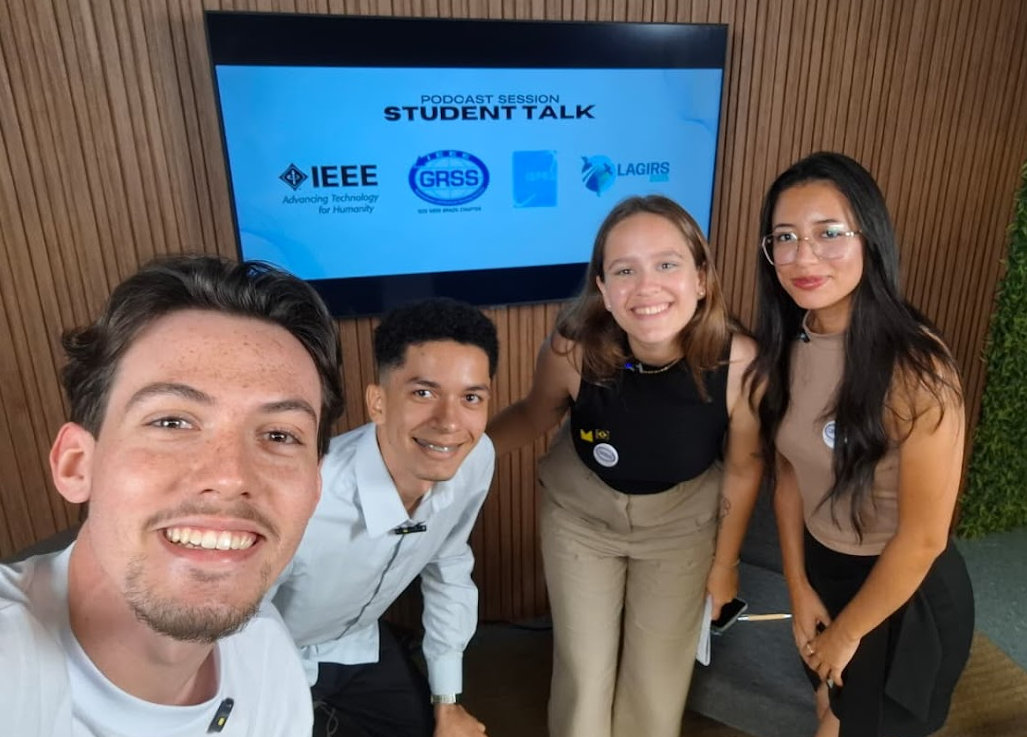
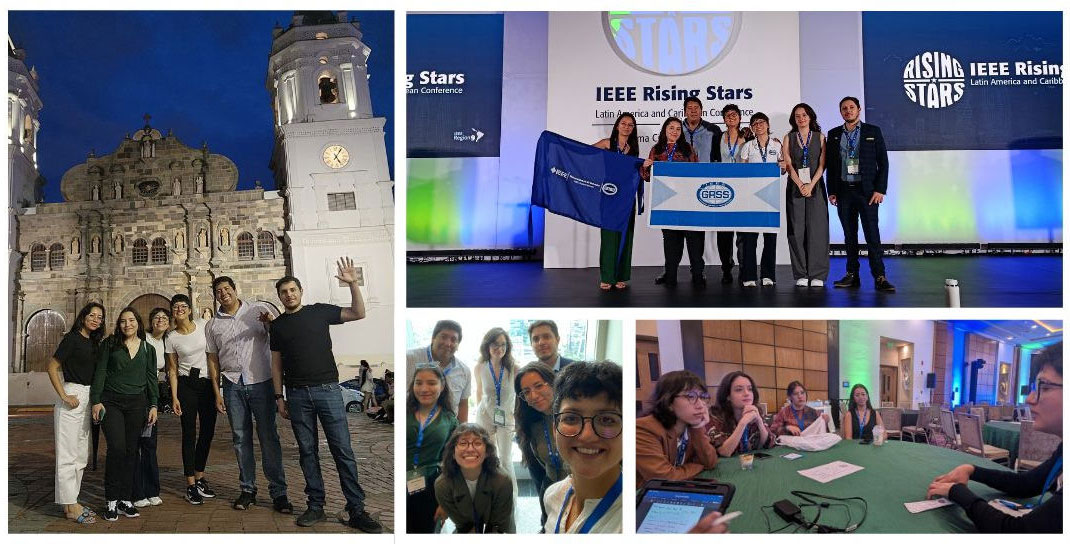
A key focus of GRSS’s Latin American activities has been student and early-career engagement. The Society actively encourages student participation in chapter events, regional symposia, and global competitions. Student paper contests, poster sessions, and three-minute thesis competitions give emerging researchers valuable opportunities to present their work and receive feedback from experienced scientists. For example, GRSS recently participated in the IEEE Rising Stars Latin America & Caribbean 2025 conference held in Panama City, Panama. The event was designed as a career accelerator for young engineering professionals and students. It focused on networking, leadership, and technical innovation in fields like AI, cybersecurity, and sustainability – and included the first Region 9 student chapter meetup. These activities help to build a network of young researchers and encourage the formation of new student‑run GRSS chapters. “By participating, students develop communication skills and confidence, which are essential for building successful research careers,” explains Latin America Liaison Maria Victoria Marinelli (National Commission for Space Activities).
Education and Training Initiatives
To address the unique geographic and economic challenges of Latin America, GRSS is actively building robust, community-driven educational programs that bridge the gap between advanced research and local accessibility. “We are actively developing virtual and in-person training opportunities to achieve a wider regional reach,” explains Marinelli. “In 2026 alone, our advanced educational programs include the 10th Spring School in Argentina, a Soil Moisture Summer School in Central Mexico, a Geo-Resilience Summer School in El Salvador, and the Luso-Latin American Seminars in Brazil. Also, a pillar of this educational push is the technical empowerment of women in geosciences through our WILATAM initiative. We want to bring world-class, inclusive training directly to our students where they are,” she adds.
These regional initiatives bring world-class instructors directly to local venues, ensuring that students and professionals have access to cutting-edge knowledge without the need for costly international travel. Organized in collaboration with universities, space agencies, and research institutes, these summer schools, short courses, and technical tutorials focus on the most rapidly evolving fields in science today. Participants are immersed in advanced topics, including machine learning for Earth observation, GeoIA, quantum computing in Earth observation, synthetic aperture radar (SAR) analysis, hyperspectral data processing, and critical environmental monitoring.
Beyond theoretical knowledge, hands-on capacity building is a vital dimension of this GRSS support. Through partnerships with local universities and research centers, GRSS-affiliated programs introduce practical training in remote-sensing instrumentation, satellite data processing, and small-satellite technologies. This enables students to gain direct experience working with real data and hardware systems. This initiative is particularly valuable in regions where access to advanced laboratory infrastructure might otherwise be limited.
Recognizing Regional Expertise and Volunteer Leadership
In Latin America, recognition goes far beyond traditional awards; it is deeply tied to elevating regional experts and honoring the immense volunteer effort that sustains the community. A critical focus for the region is ensuring that highly specialized Latin American professionals are recognized globally, particularly through the GRSS Distinguished Lecturer program.
“We are incredibly focused on highlighting the specialized talent we have right here in our region,” notes Marinelli. “Having Latin American Distinguished Lecturers – following in the important footsteps of previous pioneers like Marcelo Scavuzzo, and now celebrating new appointments like Anabella Ferral – is vital. It proves that our local professionals are generating world-class, specialized knowledge.”
Beyond these high-level recognitions, the core of Latin America’s success lies in acknowledging its grassroots leaders. Because the region is so diverse, each local chapter must develop its own strategies to maintain engagement and address local challenges. “The immense dedication of the volunteers who drive these chapter-specific strategies is fundamental to our continued growth,” Marinelli emphasizes. “My true hope is that all their hard work and commitment are increasingly seen, valued, and officially recognized by the global GRSS community.”
Looking at 2026 and Beyond
Looking ahead, the trajectory of GRSS engagement in Latin America points toward establishing a highly sustainable, globally integrated, and inclusive scientific community. “For 2026 and beyond, our strategic priorities are built on three main pillars: sustainability, regional expansion, and real-world impact,” shares Marinelli. “First, we are heavily focused on the health of our Student Branches and Young Professionals. To ensure long-term success, we are rolling out a sustainability toolkit and fostering professional-student mentor relationships to handle leadership transitions smoothly. We are also consolidating our YP organizational structure and eagerly anticipating the official inauguration of our WILATAM initiative on April 7, 2026.”
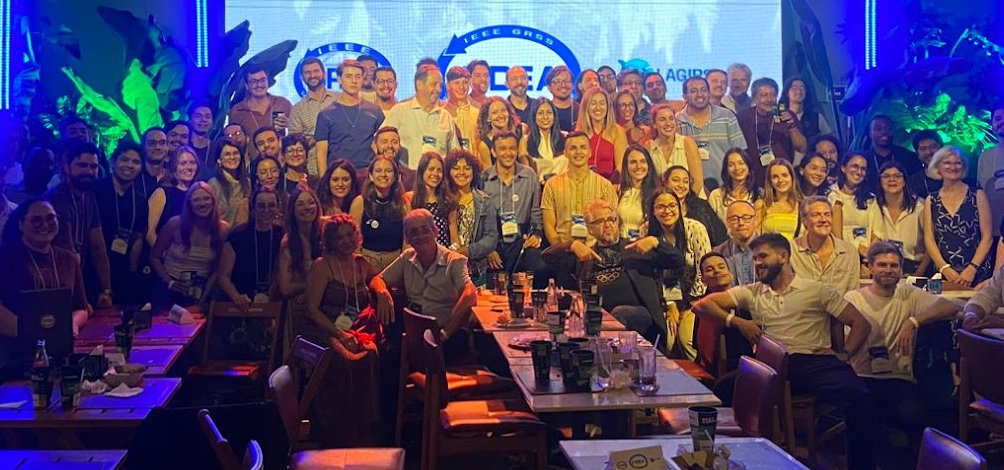
“Second, our educational and scientific footprint is reaching an exciting level of maturity,” Marinelli continues. “We are incredibly proud that our upcoming 10th Spring School in Argentina now represents the longest-running continuous history of advanced schools in our region. This historic milestone sets a powerful precedent and gold standard for our newer, highly specialized schools in Mexico Central, our newest professional Chapter, and El Salvador, one of the most active Student Brunches. Furthermore, at the symposium level, we are thrilled to announce that we are bringing LAGIRS 2027 to Peru, expanding our flagship conference’s reach to yet another vibrant scientific hub. Meanwhile, on the global stage, we will host the dedicated CCT.91 session at IGARSS 2026 and continue supporting established Latin American networks like LALINET.”
“Finally, true growth requires breaking down barriers and expanding our reach beyond academia. We are actively seeking stronger integration with industry and the private sector to bridge the gap between research and practical applications. By fostering these public-private partnerships, alongside securing international funding streams for travel grants and developing bilingual resources, we are ensuring that Latin American researchers not only participate in the global GRSS community, but lead within it and create tangible solutions for our region.”
How to Participate in GRSS Latin America Efforts
Ultimately, IEEE GRSS’s work in Latin America reflects the Society’s broader mission to advance geoscience and remote-sensing technologies while supporting communities around the world. By consolidating a strong professional network and promoting highly specialized technical activities, GRSS is actively strengthening and showcasing the academic excellence of Latin American universities on a global stage, while simultaneously driving the development of local industry. Through sustained investment in chapter growth, student engagement, and regional events, the Society champions a comprehensive vision of our science – ensuring that every technological advancement translates into a direct, tangible contribution to the resilience and prosperity of the region.
For more information, visit the GRSS Global Activities website and reach out to Dr. Maria Victoria Marinelli via email (victoria.marinelli@ieee.org).