





By Joanne Van Voorhis
 This month, we continue our series on the publications that shape communication within the IEEE Geoscience and Remote Sensing Society, as we turn to the Geoscience and Remote Sensing Section within IEEE Access (GRSS ACCESS Section). This publication represents a deliberate move toward faster, more open, and more inclusive dissemination of research, aligning GRSS with evolving expectations across the global scientific community.
Responding to a Changing Publishing Landscape
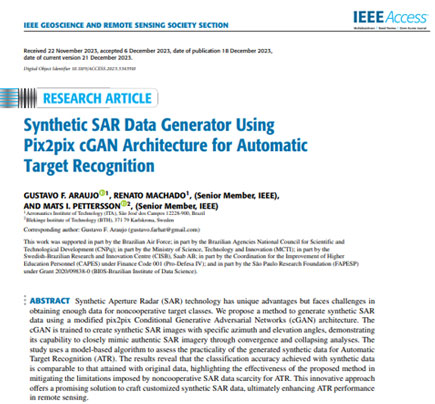 In fields like geoscience and remote sensing, where advances in computing, data availability, and sensing technologies are driving continuous innovation, the ability to share results quickly has become increasingly important. IEEE Access was introduced as a response to these changes, offering a multidisciplinary, open-access platform with a commitment to rapid publication. Recognizing the relevance of this model for its own community, GRSS established a dedicated Geoscience and Remote Sensing Section in 2023. This move ensured that research in the field would have a presence within a platform designed for speed and accessibility. Over 200 articles have been published to date, including these initial topics: GeoLake: Bringing Geospatial Support to Lakehouses” and “Synthetic SAR Data Generator Using Pix2pix cGAN Architecture for Automatic Target Recognition.”
Speed, Breadth, and Accessibility

At the core of the Geoscience and Remote Sensing Section within IEEE Access is a commitment to open access and timely dissemination. By streamlining editorial workflows and leveraging a large network of reviewers, the publication process is designed to move efficiently from submission to decision and ultimately to publication. For example, a recent research article, “Forward-Looking Monopulse Point-Cloud Formation via Local Virtual-Aperture Consistency Constraints,“ by Yihan Gao and Binke Huang, was received September 10, accepted September 24, and published September 30.
“Our goal is to combine timely dissemination with careful, technically informed peer review, while welcoming contributions across the full breadth of geoscience and remote sensing, including interdisciplinary research,” says Editor Prof. Gerardo Di Martino, University of Naples Federico II, Italy. “We know that sharing new ideas as quickly as possible can help researchers build on one another’s findings and bring useful methods into practice sooner.”
The Advantage of Breadth of Scope
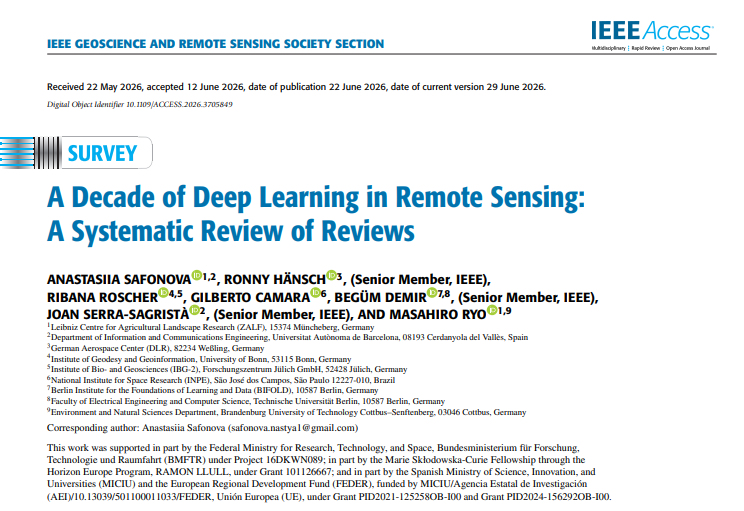 Equally important is breadth of scope. The GRSS ACCESS Section welcomes contributions across the full range of geoscience and remote sensing topics, including interdisciplinary studies and articles that synthesize knowledge across research areas. A good example is the June 2026 article, “A Decade of Deep Learning in Remote Sensing: A Systematic Review of Reviews,” by Anastasiia Safonova and colleagues. By bringing together a decade of review literature, the article offers a broad perspective on the field’s development, recurring challenges, and emerging research directions. “Broad syntheses of this kind may not always fit neatly within the scope of more specialized journals. We welcome contributions that connect topics and help readers see the broader picture,” says Di Martino. “Alongside original research and application-oriented studies, reviews, surveys, and tutorials can consolidate knowledge and provide useful perspectives for the geoscience and remote sensing community,” he explains.
Transparent Dataset Access
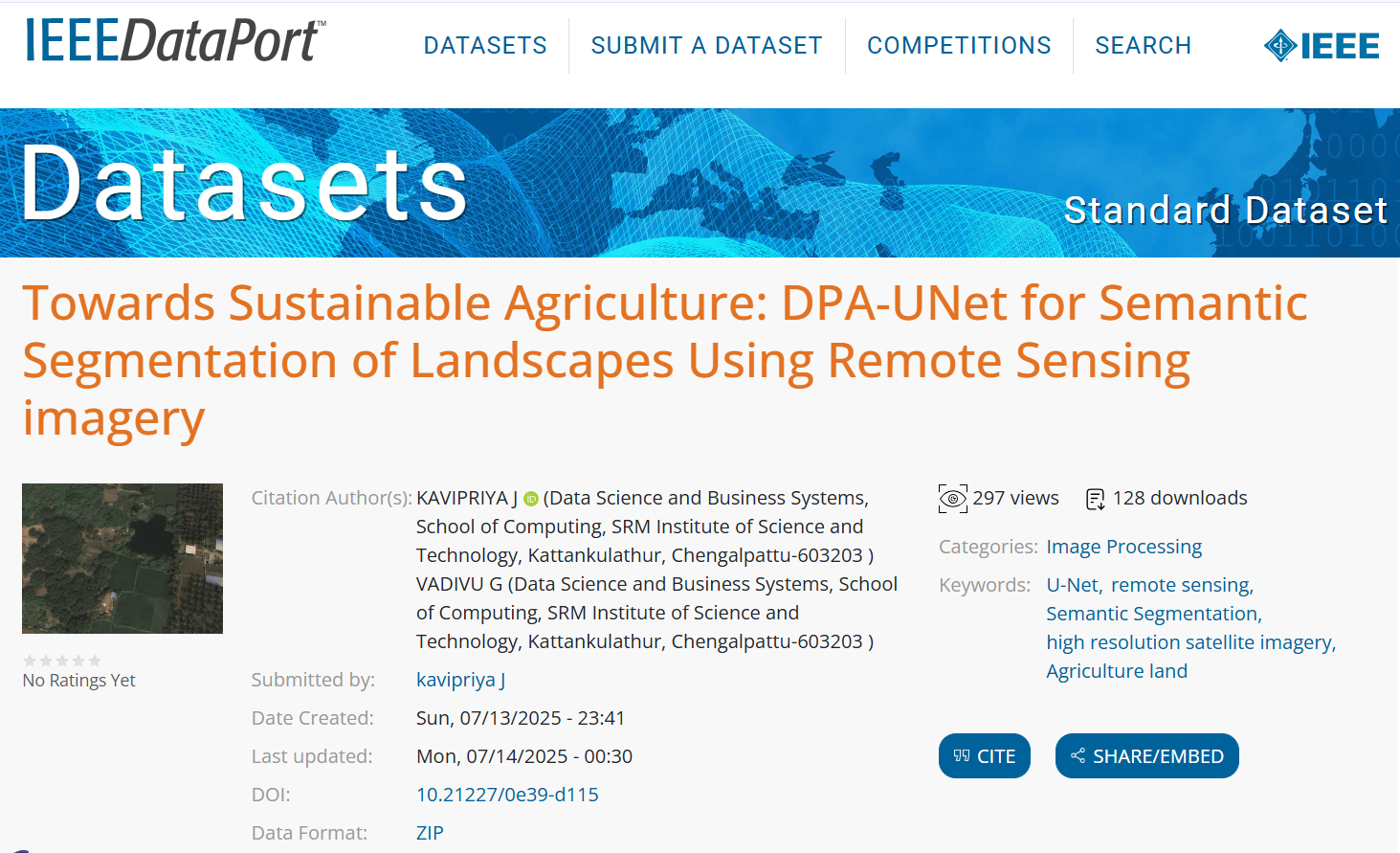 Open access to raw datasets allows researchers to independently review the findings and confirm that the study’s conclusions are accurate. It also saves other scientists valuable time and funding by letting them reuse existing data to explore new questions without starting from scratch. Ultimately, making this information freely available makes it much easier for global teams to collaborate and speed up scientific progress. Some Geoscience and Remote Sensing Section within IEEE Access articles include links to datasets such as the 2025 “Toward Sustainable Agriculture: DPA-UNet for Semantic Segmentation of Landscapes Using Remote Sensing Imagery” , with data hosted on IEEE DataPort, a data repository created by IEEE to facilitate research reproducibility.
 “This article’s ‘Dataset Available’ badge highlights the value of sharing research data,” says Di Martino. “IEEE Access also supports reproducibility through a post-publication code review initiative, offering ‘Code Available’ and ‘Code Reviewed’ badges to make shared code more visible and its assessment status clearer,” he explains.
Editorial Structure and Community Involvement
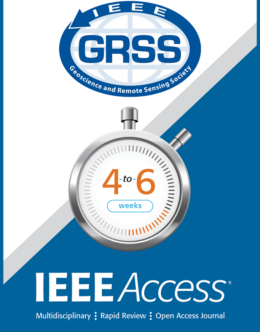
Editor Di Martino is supported by a dedicated volunteer team of associate editors, bringing together expertise from across the global research community. This diversity is critical for a publication that seeks to represent a wide range of topics and perspectives. The review process is managed by a dedicated team of topical editors. The Journal publication process is managed by the editorial team and follows a binary peer-review model – with an impressive publication target of 6 weeks for most accepted papers.
“I am grateful to our associate editors and reviewers for the time, care, and judgment they dedicate to the Section,” explains Di Martino. “Their willingness to contribute alongside their own research and professional commitments is essential to building a publication that our community can trust,” he adds.
Encouraging Participation and a Vision for the Future
GRSS ACCESS Section encourages a range of submissions and makes the process as easy as possible. “We are looking for articles on theoretical, methodological, and experimental aspects of remote sensing applied to the observation of the Earth, oceans, atmosphere, and space,” explains Di Martino. “We publish original research results, application-oriented contributions, as well as new multidisciplinary operational approaches. High-quality review, survey, and tutorial articles on selected topics of interest for the geoscience and remote sensing community are also welcome,” he adds. Details about open access and the submission process are available online.
“My vision is for the Section to be a welcoming home for multidisciplinary research, including topics less represented in other GRSS publications,” says Di Martino. “We want it to be a place where theoretical modeling, practical applications, and case studies come together through a common thread of scientific inquiry, complemented by reviews and surveys that connect fields and consolidate knowledge. By bringing together researchers from all regions and backgrounds, especially underrepresented communities, we aim to create a place where people and ideas can meet and grow.”
Links: