
 Welcome to the summer school organized by the High-Performance and Disruptive Computing in Remote Sensing (HDCRS) Working Group. HDCRS is part of the IEEE Geoscience and Remote Sensing Society (GRSS), in particular of the Earth Science Informatics (ESI) Technical Committee.
This school is the perfect venue to network with students and young professionals, as well as senior researcher and professors who are world-renowned leaders in the field of remote sensing and work on interdisciplinary research with high performance computing, cloud computing, quantum computing and parallel programming models with specialized hardware technologies.
Opening Introduction
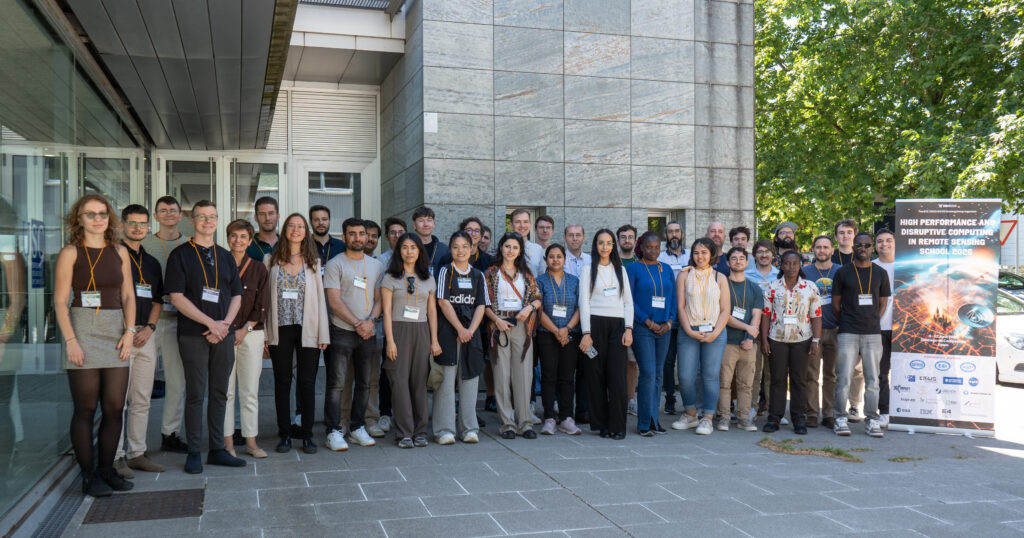
Welcome at the University of Santiago de Compostela and opening of the school .
The IEEE Geoscience and Remote Sensing Society (GRSS) focuses on advancing the science and technology of remote sensing and disseminating knowledge in this field. The society supports various technical committees and working groups that promote research, development, and education in geoscience and remote sensing. One such group is the “High-performance and Disruptive Computing in Remote Sensing” (HDCRS) of the GRSS Earth Science Informatics Technical Committee (ESI TC). HDCRS is the main organizer of this school, and its primary objective is to connect a community of interdisciplinary researchers in remote sensing who specialize in distributed computing (such as supercomputing and cloud computing), disruptive computing (e.g., quantum computing), and parallel programming models with specialized hardware (e.g., GPUs, FPGAs). The activities of HDCRS include educational events, special sessions, and tutorials at conferences, as well as publication activities, which will be presented.
The Instructor
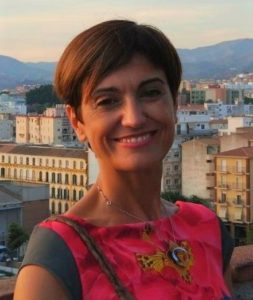
Prof. Dora Blanco Heras
Biography
Dora B. Heras is a full professor in the Department of Electronics and Computer Engineering at the University of Santiago de Compostela (Spain). She received a MS in Physics in 1993 and was awarded a PhD cum laude from this university. In the period from 2005 to 2010 she was appointed as the head of the Sustainable Development Office at this university. Since 2008 she is also with the research centre CiTIUS (Centro de Investigación en Tecnoloxías Intelixentes) where she leads the hyperspectral remote sensing computing line and has received the accreditation as full professor in 2020. He is also co-chair of the High-Performance and Disruptive Computing in Remote Sensing (HDCRS) Working Group of the IEEE GRSS ESI Technical Committee.
Her research contributions cover a range of topics in the combined fields of image processing, remote sensing, machine learning and high performance computing. In particular, in the last ten years her research has been framed in the line of high performance computing and its application to remote sensing. She has participated in research projects funded by Spanish and European institutions, and R&D agreements. She has served as program committee, guest editor and reviewer in several conferences, in particular, the Euromicro 2021 Parallel and Distributed Conference, and serves as reviewer for different top-ranked journals. She is also a member of the Euro-Par conference Steering Committee since 2018 and has acted as co-chair of the co-located workshops for all the editions since 2017.
Lecture content
The contribution of the Galician Supercomputing Centre to the infrastructures and research on High Performance and Disruptive Computing will be presented.
The Instructor
Lois Orosa
 Biography
 Biography
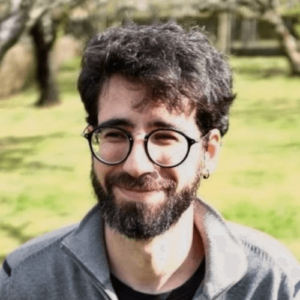
Lois Orosa defended his PhD. in the University of Santiago de Compostela in 2013. He received the distinction of “Cum Laude” for the quality of his PhD thesis, and he has been doing research on Computer Architecture since then.
Lois Orosa is currently the Director of the Galicia Supercomputing Center (CESGA) since March 2022, which currently has 51 people. As part of the responsibilities assumed at CESGA, Lois Orosa is leading the Galicia Quantum Technology Hub (or “ Polo de Tecnoloxías Cuánticas de Galicia ”). The Hub strategy plan foresees an investment of 154M euros until 2030, from which around 30M were already executed.
Before joining CESGA, he was doing research at ETH Zürich for 4 years in the SAFARI Research group, lead by Onur Mutlu. Before that, he received a research grant to work on Computer Architecture for 3 years in the University of Campinas, where he co-advise a PhD student. He also has been doing other research stays on top International Institutions, both in Industry, in the companies IBM R&D (Haifa, Israel), Xilinx (Dublin, Ireland), Recore Systems (Enschede, Netherlands), and Academia, in Universidade de Illinois en Urbana-Champaign (USA), Universidade Nova de Lisboa (Portugal).
He has contributed very significantly to the field of Computer Architecture in the last few years, making very relevant contributions especially in reliability and security of computer systems. He published in the 4 top venues in this area in the last few years: 4 papers in ISCA, 5 papers in HPCA, 7 papers in MICRO, and 3 papers in ASPLOS, from which he received 19 HiPEAC awards , given to European researchers that publish in strong venues .
He also published 7 additional papers on top venues and journals (Q1 equivalent). The impact of these publications is significant in recent years (470 citations in the year 2023, 1512 citations in total). He also has presented several posters and short papers, and has given multiple talks about his research. He serviced the community by being a reviewer and a program committee member of many conferences, journals and workshops.
Lecture content
To be announced
The Instructor
Gabriele Meoni

Biography
Gabriele Meoni received his MsC degree in Electronic Engineering and his PhD degree in Information Engineering from the University of Pisa respectively in 2016 and in 2020. After completing his doctoral studies, from September 2020 to April 2023 he held the position of Internal Research Fellow at the European Space Agency (ESA) (Advanced Concepts Team (ACT) September 2020 – August 2021, Φ-lab September 2021 – April 2023), where he conducted research on Artificial Intelligence (AI) and neuromorphic computing for onboard spacecraft applications. During 2022-2023, he was a visiting researcher at AI Sweden, focusing on distributed edge learning for satellite constellations. From May 2023 to April 2024, he served as an Assistant Professor in the Faculty of Aerospace Engineering at Delft University of Technology. Currently, Meoni is an Innovation Officer at ESA, with research interests including satellite onboard processing, Cognitive Cloud Computing in Space, AI for Earth Observation, and neuromorphic computing. Meoni coauthored more than 50 scientific publications. He is currently co-chair of the IEEE GRSM Earth Science Informatics (ESI) technical committee.
Lecture content
Google Earth Engine (GEE) is a cloud-based platform that democratizes access to Google’s computational capabilities, allowing for planetary-scale geospatial data analysis to address critical societal issues. Unlike other platforms, it is an integrated tool that is not only accessible to remote sensing scientists but also to a broader audience, who may lack the technical expertise to utilize traditional supercomputers or large-scale cloud computing resources. In this lecture, we will include:
– Introduction to GEE: We will cover the basics of using GEE for Earth observation and data processing.
– Machine learning in GEE: You will get practical experience in utilizing GEE’s powerful machine-learning capabilities for classification and regression tasks.
– Time series analysis in GEE: You will learn advanced techniques, including the Continuous Change Detection and Classification (CCDC) method.
Additionally, we will show you how to import and export your own data and provide examples of how you can share your results with broader audiences using GEE’s shareable user interfaces.
The Instructors
Emma Izquierdo-Verdiguier

Biography
Emma Izquierdo-Verdiguier (Ph.D., 2014, University of Valencia) is an Senior Scientist in the Institute of Geomatics at the University of Natural Resources and Life Sciences (BOKU, Vienna). Her research interests are focused on the use of Earth Observation data and cloud computing environment for land surface phenology. Her previous research focused on machine learning applied to remote sensing data. In particular, nonlinear feature extraction based on kernel methods, and on automatic object identification and classification using multispectral images. She is also an external professor of the Master of Remote Sensing at the University of Valencia. In 2012, her paper was ranked second in the student’s competition of the IEEE Geoscience and Remote Sensing Symposium (IGARSS). Dr. Izquierdo-Verdiguier is a Google Developer Expert from 2022 and a member of the ELLIS AI excellence network from 2024.
Alvaro Moreno-Martínez
Biography

Alvaro Moreno-Martínez earned a Ph.D. degree in Physics (2014, summa cum laude) from the University of València, and he is currently a Senior Researcher at the Image Signal Processing Group (ISP) at the same university. Dr. Moreno is a Google Developer Expert (GDE), and his research has been mainly focused on the development of physical and advanced machine learning models and the implementation of operational methodologies for the study of vegetation cover through satellite imagery at different spatial/temporal scales. He has published 44 papers in international peer-reviewed journals, 3 book chapters, and more than 80 international conference presentations. Dr. Moreno is an external professor of the Master of Remote Sensing and the Data Science degree, both at the University of Valencia, and he has participated in 12 projects (7 national, 5 international), and member of the European Geosciences Union, IEEE, and the American Geophysical Union.
Lecture content
The lecture series aims to provide a practical introduction to quantum computation, tailored for non-specialists, with a focus on Earth observation (EO) applications. The first lecture will provide the fundamentals, highlighting the potential and limitations for EO applications. The series will then follow a hands-on approach, gradually introducing theoretical concepts along with their practical implementation with Python and Pennylane through four guided coding sessions. Participants will build quantum circuits, explore quantum algorithms, and apply quantum machine learning (quantum kernels, hybrid quantum-classical neural networks) to real-world tasks like semantic segmentation of remote sensing images, ensuring students gain direct experience with state-of-the-art QML models for EO.
Learning Outcomes
- Understand core principles, motivations, and limitations of quantum computing
- Implement and run quantum circuits with Python and Pennylane
- Design and apply quantum machine learning models for Earth observation
Agenda
Introduction to quantum computation
- What is quantum computation
- NISQ vs fault-tolerant quantum computers
- Applications to Earth observation
Hands-on Session 1: Hello Quantum World
- Setting up the environment
- Getting started with quantum computing libraries
Hands-on Session 2: Quantum Algorithms with Pennylane
- Qubits, Bloch sphere representation, circuits, basic operations
- Examples of quantum circuits
- Hardware backends
Hands-on Session 3: Quantum Kernels for Earth observation
- Fidelity quantum kernels for semantic segmentation of remote sensing images
Hands-on Session 4: Hybrid Quantum-Classical Neural Networks for Earth observation
- Examples of hybrid quantum-classical neural networks for semantic segmentation of remote sensing images: quanvolutional network, quantum U-net
The Instructors
Artur Miroszewski

Biography
Artur Miroszewski is a postdoctoral researcher at Jagiellonian University. He obtained his Ph.D. in 2021 from the National Centre for Nuclear Research, Warsaw, Poland, in the field of theoretical physics. His doctoral thesis investigated the potential existence of quantum gravitational effects in the early universe, proposing a primordial singularity avoidance scenario known as the Big Bounce. His research also explored possible observational signatures of this scenario within the gravitational waves spectrum. Currently, Artur is actively involved in a European Space Agency project focusing on the exploration of quantum machine learning applications for satellite data analysis. His primary focus revolves around the utilization of quantum kernel methods for classification tasks.
Amer Delilbasic

Biography
Amer Delilbasic is a research scientist at the Simulation and Data Lab “AI and ML for Remote Sensing”, Jülich Supercomputing Centre, Forschungszentrum Jülich, Germany. He received his B.Sc. and M.Sc. degrees in Italy, both cum laude, in Information and Communication Engineering from the University of Trento in 2019 and 2021, respectively, and his PhD degree in Computational Engineering from the University of Iceland in 2026. His research focuses on machine learning and optimization methods based on quantum computing and high performance computing for Earth observation. He has co-authored several articles in leading journals and international conferences in these areas. In 2025, he received the Best Paper Award at the QUEST-IS Conference, held in Paris, France. In 2021, his proposal was selected for funding under the Open Space Innovation Platform of the European Space Agency (ESA). He has also been a Visiting Researcher at the Φ-lab, European Space Research Institute (ESRIN), ESA. He currently serves as co-lead of the Quantum Computing for Earth Observation working group within the IEEE Geoscience and Remote Sensing Society Quantum Earth Science and Technology Technical Committee. He co-organized a quantum computing workshop at the IEEE Indian Geoscience and Remote Sensing Symposium 2025 in Bhubaneswar, India.
Lecture content
Foundation Models (FMs) represent one of the latest leap forward in AI, following the era of Deep Learning. Trained on vast amounts of unlabeled data through self-supervised learning, these models capture rich patterns that can be applied to a wide array of downstream tasks, even with limited or no additional training data. This paradigm holds particular promise for Earth Observation (EO) by enabling breakthroughs in analytical and predictive capabilities.
In EO, FMs can significantly enhance applications such as geospatial semantic segmentation, crop type mapping, etc. By pretraining on large-scale datasets, they deliver better downstream performance. Their latent space representations and embeddings also enable powerful insights while reducing the need for extensive labeled data, a critical advantage in remote sensing, where labeling is often expensive and time-consuming.
Despite these benefits, integrating FMs into EO workflows poses distinct challenges. EO data often spans multiple modalities, resolutions, and spectral bands, requiring specialized adaptation and careful model updating. Moreover, FMs demand significant computational resources and optimized training strategies, particularly when handling enormous, continuously growing geospatial datasets. Evaluating and benchmarking FMs for these specialized applications further complicates their deployment, as existing benchmarks may be limited in scope.
This session begins with a lecture on why High-Performance Computing (HPC) is not just a convenience but a structural requirement for building foundation models that generalize across geographies, sensors, and downstream tasks. Training deep learning models on planetary-scale Earth observation data demands massively parallel processing, fast interconnects, and large-scale storage that turn months of computation into days.
The session then introduces TerraMind, a generative multimodal foundation model for EO developed in the ESA-funded FAST-EO project. TerraMind introduces the concept of Thinking in Modalities, enabling coherent reasoning across heterogeneous data sources, and achieves state-of-the-art results on established community benchmarks. Using the TerraTorch toolkit, participants will use their generative capabilities and fine-tune TerraMind for a real-world downstream task in an interactive, hands-on session.
Finally, the session covers how the emergence of Geospatial FMs has shifted remote sensing analysis from imagery to embeddings, learned representations of EO data. These present a low barrier to EO analysis, providing features that can be used across various downstream tasks. In an interactive hands-on session, participants will learn how to deploy them for crop yield prediction, benchmarking embeddings against state-of-the-art methods.
Agenda
Block 1: Introduction
- Is High-Performance Computing (HPC) Needed? Training deep learning models on planetary-scale Earth observation data
Blocks 2 and 3: TerraMind on downstream tasks
- Hands-on TerraMind: multimodal outputs and fine-tuning for a real-world downstream task with TerraTorch
Block 4: Embeddings for crop yield prediction
- Hands-on: retrieving embeddings, generating them from satellite imagery, and deploying them for crop yield prediction
The Instructors
Rocco Sedona
Biography
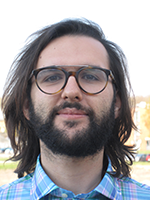
Rocco Sedona (Member, IEEE) received the B.Sc. and M.Sc. degrees in information engineering from the University of Trento, Trento, Italy, in 2016 and 2019, respectively, and the Ph.D. degree in computational engineering from the University of Iceland, Reykjavik, Iceland, in 2023. He is the deputy head of the “AI and ML for Remote Sensing” Simulation and Data Lab, JSC, Germany. His research interests primarily lie in the field of deep learning and its application to remote sensing data. He has extensively utilized optical satellite data acquired by Landsat (NASA) and Sentinel (ESA) missions toward near real-time land-cover classification. In addition, he specializes in distributed deep learning on high-performance computing systems, an area of study that he has been actively engaged in since 2019.
Benedikt Blumenstiel
Biography

Benedikt is an AI researcher at the IBM Research Lab in Zurich. As part of the AI for Climate Impact team, he focuses on advancing foundation models for Earth observation and has contributed to several state-of-the-art models, including Prithvi, TerraMind, and others.
Kennedy Adriko
Biography

Kennedy Adriko is a member of the “AI and ML for Remote Sensing” Simulation and Data Lab at the Jülich Supercomputing Centre, Forschungszentrum Jülich, Germany. His research focuses on EO Foundation Models, efficient and scalable AI compression, and data fusion techniques for Earth Observation applications. He is currently working towards a Ph.D. in Computer and Electrical Engineering at the University of Iceland, Reykjavik, Iceland.
Lecture Content
As AI systems increasingly move from passive tools to autonomous agents capable of taking action in the world, a new paradigm is emerging that transforms both software development and scientific inquiry. The exponential growth of data and computational power, combined with the rise of LLMs as sophisticated reasoning engines, has initiated a shift toward agentic workflows, where LLMs and other computational tools are orchestrated as autonomous or semi-autonomous agents to tackle complex, multi-step problems.
This session explores both dimensions of this paradigm shift. It begins with a practical exploration of what it means to build and operate software in the age of agentic computing, using the Blablador LLM inference service as a case study. Through real-world examples, e.g., mapping illegal landing strips in the Amazon, the session shows how agentic systems can change the mindset of the practitioner, and offers practical takeaways and lessons from the edge of what is currently possible.
The session then turns to the application of agentic workflows for scientific discovery. When applied to scientific inquiry, this approach facilitates automating hypothesis generation, data analysis, and insight extraction. However, unique challenges persist in applying these agentic systems to specialized domains like Earth Observation, particularly in grounding LLMs, reasoning with geospatial datasets, and ensuring the reliability of autonomous systems. Participants will be guided through the lifecycle of designing and implementing agentic workflows for scientific discovery using a new framework called Accelerated Knowledge Discovery.
Agenda
Block 1: Agentic computing and Blablador
- Building and operating software in the age of agentic AI
- Case study: vibe coding a downloader for mapping illegal landing strips in the Amazon
Block 2, 2 and 3 Agentic workflows for scientific discovery
- Hands-on: designing and implementing agentic workflows for EO using Accelerated Knowledge Discovery
The Instructors
Alexandre Strube
Biography
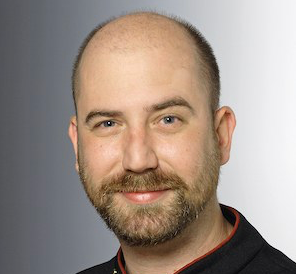
Alexandre has a PhD in High-Performance computing by the University Autònoma de Barcelona. He worked at the Performance Analysis team at the Jülich Supercomputing Centre from 2010 to 2015, on the Application Support team from 2015 to 2019, and since then he is a Consultant at Helmholtz AI. He is also one of the maintainers of the whole Scientific software stack on Juelich’s supercomputers, and he is the official maintainer of LMOD, the module system, for Debian and Ubuntu operating systems. Alexandre develops and maintains Blablador, the LLM inference infrastructure of the Helmholtz Foundation.
Muthukumaran Ramasubramanian
Biography
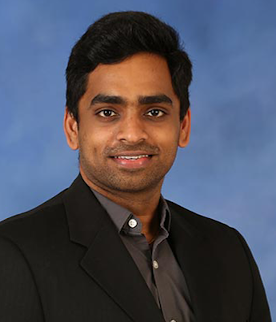
Muthukumaran Ramasubramanian received the Doctorate degree in computer science from the University of Alabama in Huntsville (UAH). He currently works for the NASA Office of Data Science and Informatics (ODSI) where he currently leads the accelerated Knowledge Discovery team. In that capacity, he works closely with domain experts to build safe and effective scientific agents. He previously led the Machine Learning Team for NASA–Interagency Implementation and Advanced Concepts Team, UAH. His work focuses on building agentic systems with Subject Matter experts (SMEe), deep-NLP techniques to surface novel relationships from large corpora of text and to deploy deep learning solutions to detecting science phenomena on a global scale. His research interests include machine learning, big data, computer vision, and scalable cloud services.