


Loading Events

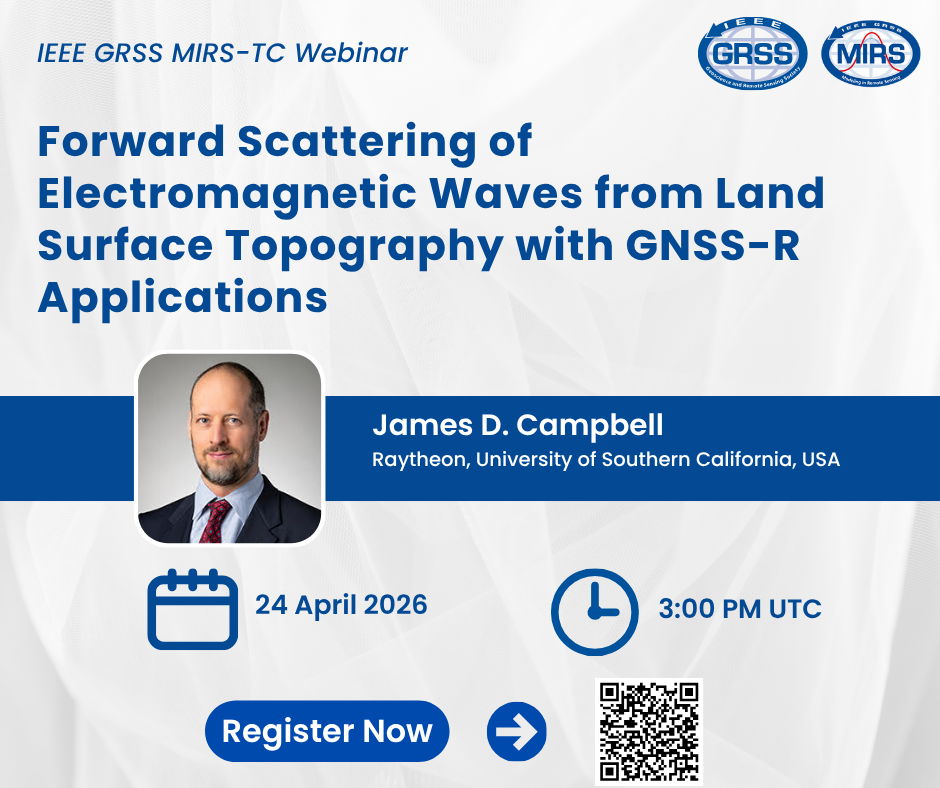
Forward Scattering of Electromagnetic Waves from Land Surface Topography with GNSS-R Applications

Webinar Speaker:

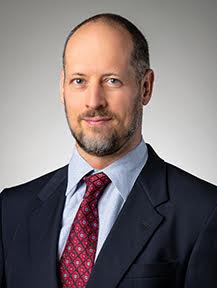
James D. Campbell

Affiliation:

Raytheon, University of Southern California, USA

About the Webinar

Reflections of satellite signals from land surfaces are sensitive to a variety of biogeophysical parameters of interest for environmental monitoring. With the proliferation of spaceborne global navigation satellite system reflectometry (GNSS-R) missions and experiments in recent years, there is a growing need for the development and validation of electromagnetic scattering models to describe the delay-Doppler map (DDM) data generated by these sensors. This webinar focuses on scattering methods for bare land surfaces described by a digital elevation model (DEM) and surface roughness statistics or spectra. The basis of these models in the Kirchhoff integral is presented, along with various methods and assumptions that can be used to evaluate the integral efficiently. Validation results and topics for further research are discussed.


About the Speaker

James D. Campbell is with the Ming Hsieh Department of Electrical and Computer Engineering at the University of Southern California in Los Angeles, CA, USA, and he is a Technical Fellow with Raytheon in El Segundo, CA, USA. He received the B.S. degree in mathematics from Harvey Mudd College, Claremont, CA, USA, in 1998, the M.S. degree in applied mathematics from the California State Polytechnic University, Pomona, CA, USA, in 2006, and the Ph.D. degree in electrical engineering from the University of Southern California in 2019. He has been a member of the IEEE Geoscience and Remote Sensing Society (GRSS) since 2013. He co-led the GNSS-R Working Group of the GRSS Modeling in Remote Sensing Technical Committee (MIRS TC) from 2021 to 2025. He is serving the MIRS TC Chair-elect for the 2027-2029 term.

Days
Hours
Minutes
Seconds

Looking for an older Event? See our Past Events. Events prior to April 2024 can be found in our Events Archive.