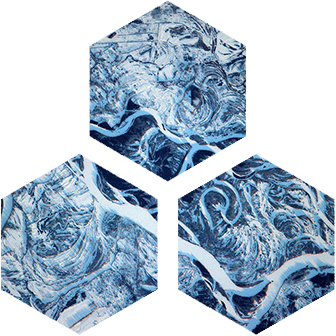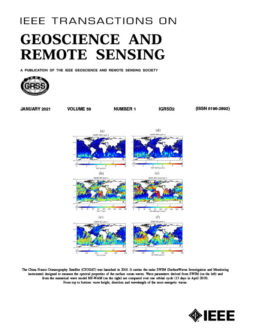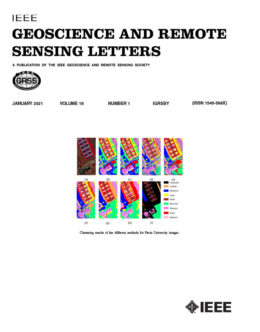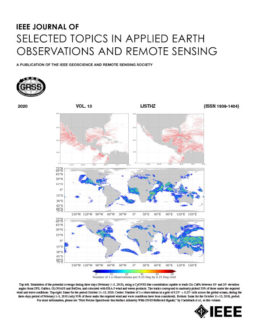

Image of the Day

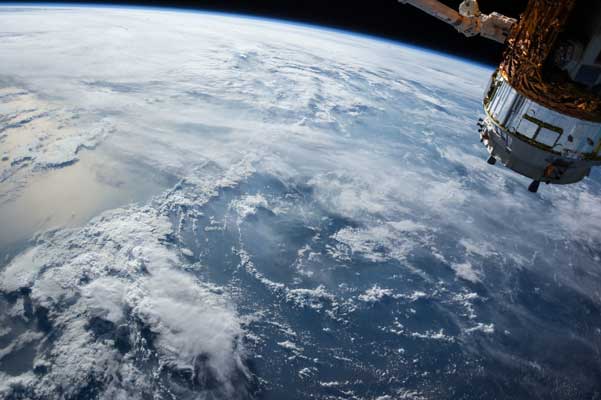
Kelvin Wave Renews El Niño

Kelvin Wave Renews El Niño

Our Mission

The Geoscience and Remote Sensing Society seeks to advance science and technology in geoscience, remote sensing and related fields using conferences, education, and other resources.

Fields of Interest

The fields of interest of the Society are the theory, concepts, and techniques of science and engineering as they apply to the remote sensing of the earth, oceans, atmosphere, and space, as well as the processing, interpretation and dissemination of this information.

  • Desert

    The advances of desertification is a menace to agriculture and urban settlements in many areas of the world. Urban areas, natural resources and crop monitoring and critical for our development and sustainability.

  • Desert

    Oceans cover 97% of the Earth’s surface and water controls the planet’s climate regulating it. Oceans contain the largest food and energy stocks, necessary for the development of an increasing population.

  • Desert

    Katrina’s hurricane is a clear example of a devastating event due to an uncontrolled atmospheric event. Predicting hurricane trajectories helps save hundreds of lives and goods.

  • Desert

    The cryosphere contains an immense amount of solid water. During the past decades the amount of ice has been continuously decreasing, while the mean sea level has been slightly rising. Cryospheric monitoring provides the clues of the past of our planet, and may provide a clear indication of its future.

  • Desert

    Data gathered from a number of remote sensors must be processed before it is converted into usefull information. Classification techniques help in this process.

  • Desert

    Remote Sensors are all based on some sort of electromagnetic phenomena (scattering or emission). Understanding the propagation of the electromagnetic waves and their interaction with matter is critical to design new sensors and understand the measurements.

  • Desert

    Active and passive sensors, either in the microwave or in the visible and infrared parts of the spectrum are systematically used to gather data of a number of physical phenomena from ground, airplane and space.

  • Desert

    Information (mainly from remote sensors) for the benefit of society is the moto of the Global Earth Observation System of Systems.

A Letter From Our President

Moreira-Photo

Happy New Year and Welcome to GRS-S!

The IEEE Geoscience and Remote Sensing Society (GRS-S) has just launched its new web site. We hope to provide more information and a better service to our members and to the international remote sensing community. This year is a special year for GRS-S: Our 30th IGARSS conference will be held in July 25-30, Honolulu, Hawaii. You are cordially invited to join us in this special event and commemorate the 30th anniversary of IGARSS! This conference is predestinated to become the best IGARSS that we ever had!
Continue reading A Letter From Our President

Find A Chapter